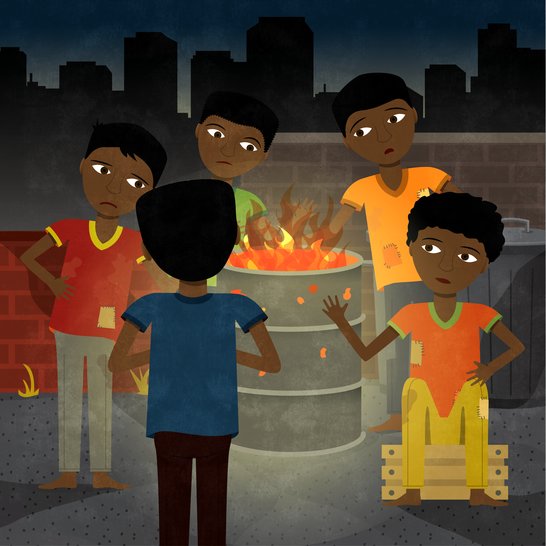
In the busy city of Nairobi, far away from a caring life at home, lived a group of homeless boys. They welcomed each day just as it came.
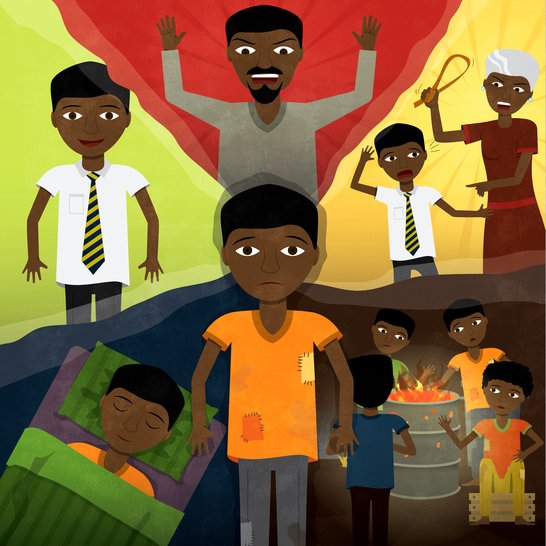
On one morning, the boys were packing their mats after sleeping on cold pavements. To chase away the cold they lit a fire with rubbish.
Among the group of boys was Magozwe. He was the youngest.
Dans la ville animée de Nairobi, loin d’un climat familial attentif et aimant, vivait un groupe de jeunes sans-abris. Ils vivaient au jour le jour. Un matin, les garçons remballaient leurs matelas après avoir dormi sur le trottoir tout froid. Pour braver le froid, ils avaient fait un feu à l’aide de détritus. Parmi ces jeunes garçons se trouvait Magozwe. C’était le plus jeune d’entre eux.
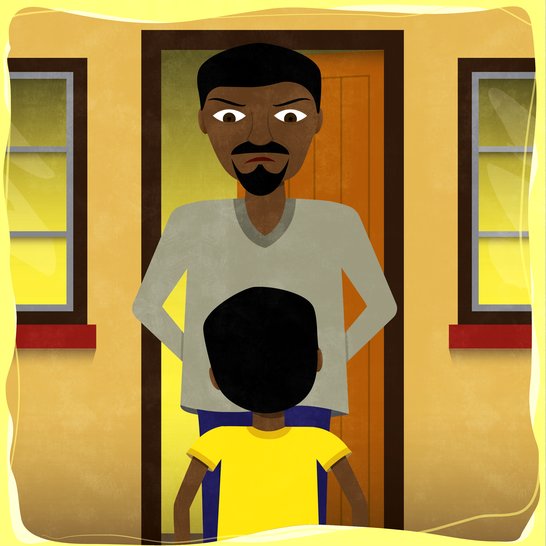
When Magozwe’s parents died, he was only five years old. He went to live with his uncle. This man did not care about the child. He did not give Magozwe enough food. He made the boy do a lot of hard work.
Quand Magozwe perdit ses parents, il n’avait que cinq ans. Après leur décès, il alla s’installer avec son oncle, mais ce dernier n’avait pas une once d’affection pour Magozwe. Il ne lui donnait pas assez de nourriture et le faisait travailler très dur.
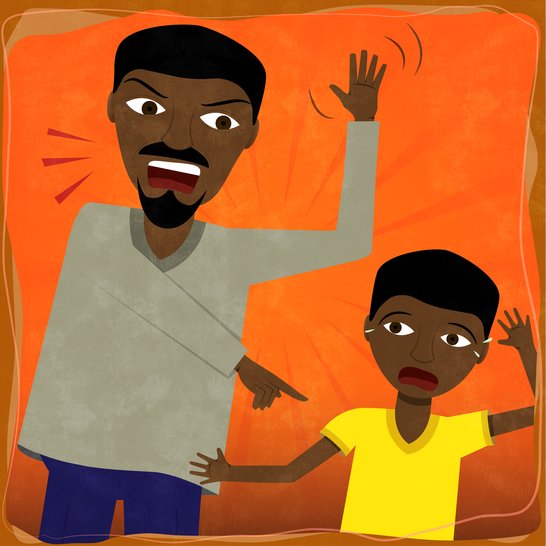
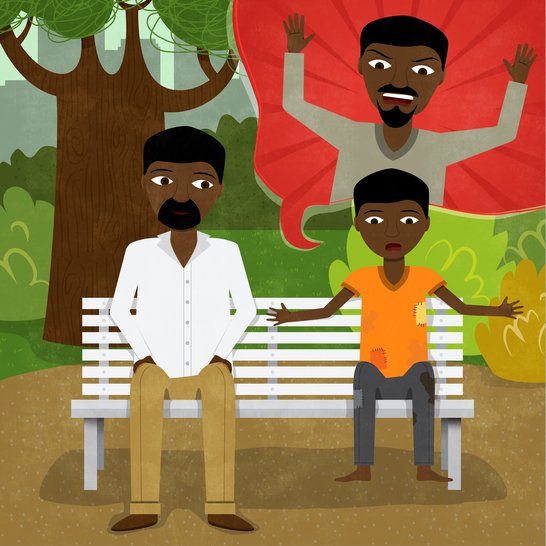
If Magozwe complained or questioned, his uncle beat him. When Magozwe asked if he could go to school, his uncle beat him and said, “You’re too stupid to learn anything.”
After three years of this treatment Magozwe ran away from his uncle. He started living on the street.
Si Magozwe avait le malheur de se plaindre ou de répliquer, son oncle le frappait. Quand Magozwe demandait s’il pouvait aller à l’école, son oncle le frappait de plus belle, lui disant : « Tu es trop stupide pour apprendre quoi que ce soit. » Après avoir supporté ce traitement pendant trois ans, Magozwe s’enfuit de chez son oncle et commença à vivre dans la rue.
Street life was difficult and most of the boys struggled daily just to get food. Sometimes they were arrested, sometimes they were beaten. When they were sick, there was no one to help.
The group depended on the little money they got from begging, and from selling plastics and other recycling.
Life was even more difficult because of fights with rival groups who wanted control of parts of the city.
La vie dans la rue était difficile et la plupart des garçons avaient du mal à se procurer de la nourriture. Il leur arrivait de se faire arrêter, et quelquefois, ils se faisaient tabasser. Lorsqu’ils étaient malades, il n’y avait personne pour les aider. Le groupe dépendait du peu d’argent gagné en mendiant, ou en vendant des plastiques ou autres objets recyclables. Les bagarres avec les autres groupes qui voulaient contrôler toute la ville rendait leur vie encore plus difficile.
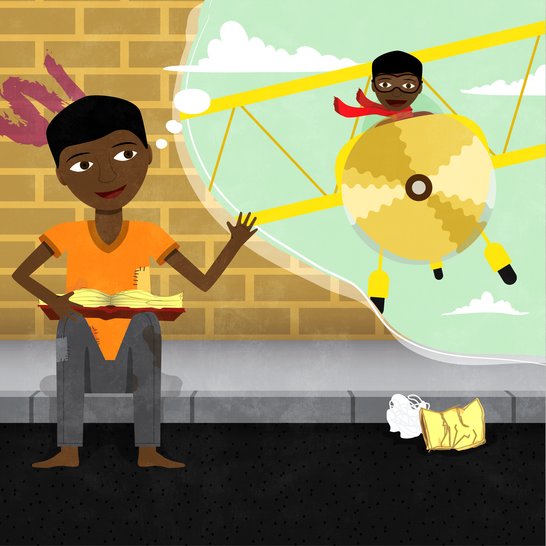
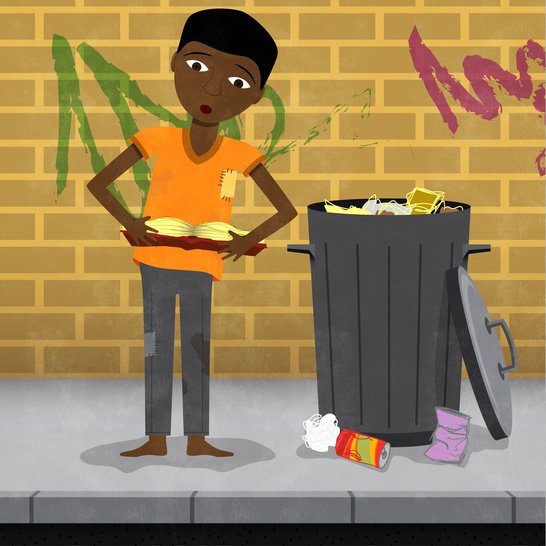
One day while Magozwe was looking through the dustbins, he found an old tattered storybook. He cleaned the dirt from it and put it in his sack.
Every day after that he would take out the book and look at the pictures. He did not know how to read the words.
Un jour, Magozwe fouilla dans la poubelle et trouva un vieux livre. Il le dépoussiéra et le mit dans son sac. Les jours suivants, il prit l’habitude de sortir son livre de son sac et d’en regarder les images. Il ne savait pas lire.
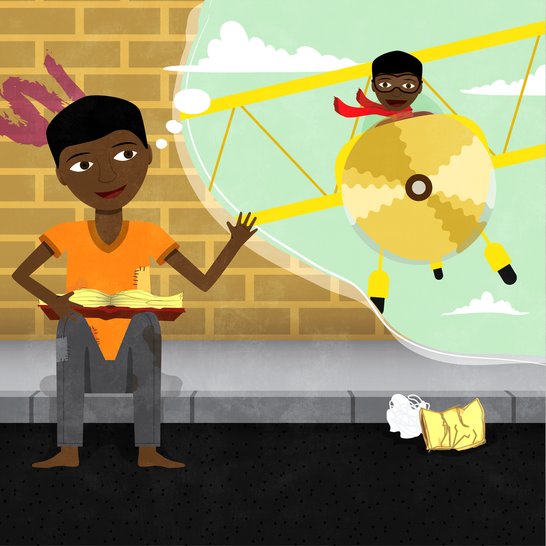
The pictures told the story of a boy who grew up to be a pilot.
Magozwe would daydream of being a pilot. Sometimes, he imagined that he was the boy in the story.
Les images racontaient l’histoire d’un garçon qui, quand il était devenu grand, devint pilote. Magozwe rêvait qu’il était pilote. Quelquefois, il imaginait qu’il était le garçon dans l’histoire.
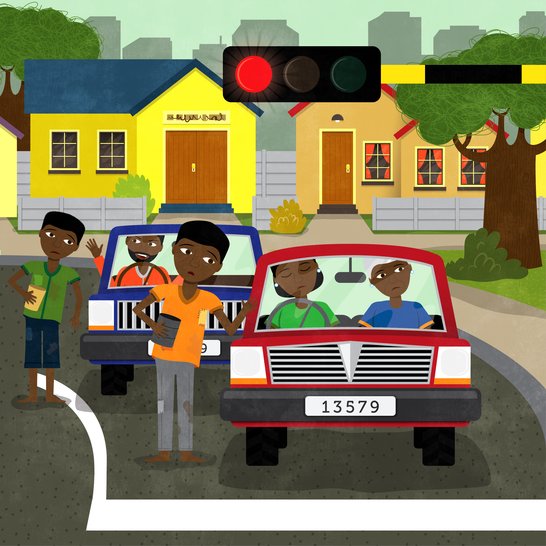
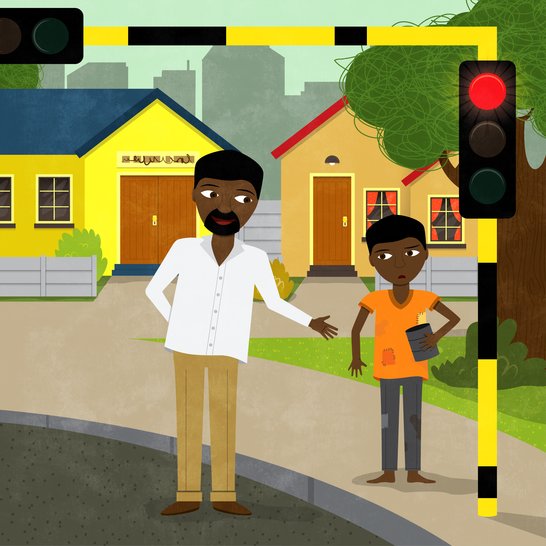
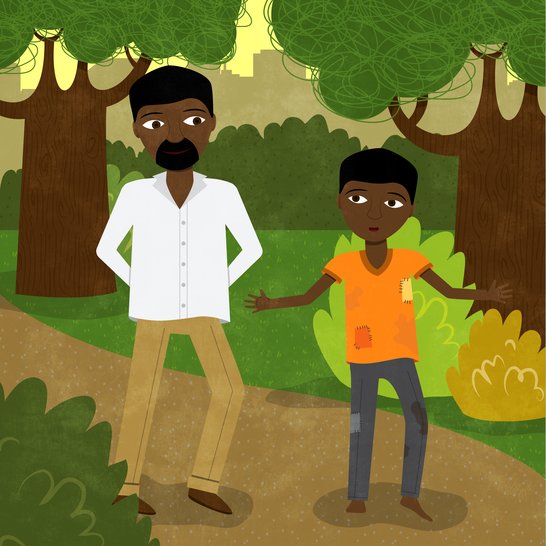
It was cold and Magozwe was standing on the road begging. A man walked up to him. “Hello, I’m Thomas. I work near here, at a place where you can get something to eat,” said the man.
He pointed to a yellow house with a blue roof. “I hope you will go there to get some food?” he asked.
Magozwe looked at the man, and then at the house. “Maybe,” he said, and walked away.
Il faisait froid. Magozwe se tenait dans la rue, mendiant, quand soudain un homme s’approcha de lui et dit : « Bonjour, je m’appelle Thomas. Je travaille tout près d’ici, dans un endroit où tu pourras manger », dit-il. Il lui montra au loin une maison jaune au toit bleu. « J’espère que tu viendras manger », lui dit-il. Magozwe regarda l’homme, puis la maison, et lui répondit : « Peut-être », puis il s’en alla.
Over the months that followed, the homeless boys got used to seeing Thomas around. He liked to talk to people, especially people living on the streets.
Thomas listened to the stories of people’s lives. He was serious and patient, never rude or disrespectful. Some of the boys started going to the yellow and blue house to get food at midday.
Les mois suivants, le jeune sans-abri avait pris l’habitude de voir Thomas dans les parages. Il aimait parler avec les gens qui vivaient dans la rue. Thomas écoutait les histoires que lui racontaient les gens. Il était sérieux, patient. Il n’était jamais impoli ni irrespectueux. Certains garçons commencèrent à se rendre à la maison jaune et bleue pour avoir un repas à midi.
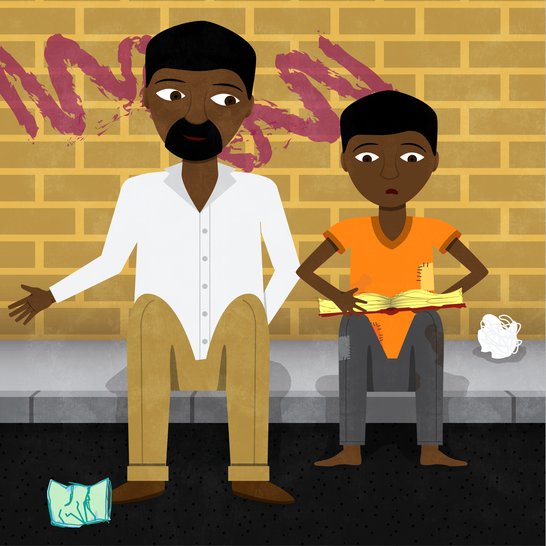
Magozwe was sitting on the pavement looking at his picture book when Thomas sat down next to him.
“What is the story about?” asked Thomas.
“It’s about a boy who becomes a pilot,” replied Magozwe.
“What’s the boy’s name?” asked Thomas.
“I don’t know, I can’t read,” said Magozwe quietly.
Magozwe s’asseyait sur le trottoir et regardait les images de son livre quand soudain, Thomas vint s’assoir à côté de lui. « De quoi parle l’histoire » ? demanda Thomas. « C’est l’histoire d’un garçon qui devient pilote », lui répondit Magozwe. « Comment s’appelle ce garçon », demanda Thomas. Magozwe répondit calmement : « Je ne sais pas, je ne sais pas lire. »
When they met, Magozwe began to tell his own story to Thomas. It was the story of his uncle and why he ran away.
Thomas didn’t talk a lot, and he didn’t tell Magozwe what to do, but he always listened carefully.
Sometimes they would talk while they ate at the house with the blue roof.
Quand ils se rencontraient, Magozwe commençait à raconter son histoire à Thomas. L’histoire de son oncle et la raison pour laquelle il s’était enfui. Thomas ne parlait pas beaucoup et ne disait pas à Magozwe ce qu’il devait faire, mais l’écoutait toujours très attentivement. Quelques fois, ils parlaient autour d’un repas qu’ils prenaient dans la maison au toit bleu.
Nocakalondelela ciindi cakukkwanisya mwaka ili kkumi yakuhyalwa kwa Magozwe, Thomas wakamupa kambi kabbuku. Kakali kabbuku kapandulula musankwa umwi wakumunzi mbuli mbwaakaba ampuwo akaambo ka musabano wa mupila. Thomas wakali kumubalila caano eeci zyiindi zyinji kusikila limwi bumwi buzuba wakati, “Cakkwana ciindi chakuti uunke kucikolo kutegwa ukaiye kubala akulemba. Inouyeeya buti?” Thomas wakapandula kuti kuli busena bumwi ooko kwalo bana nkobakkala akwiiya.
Around Magozwe’s tenth birthday, Thomas gave him a new storybook. It was a story about a village boy who grew up to be a famous soccer player.
Thomas read that story to Magozwe many times, until one day he said, “I think it’s time you went to school and learned to read. What do you think?” Thomas explained that he knew of a place where children could stay, and go to school.
Autour du dixième anniversaire de Magozwe, Thomas lui offrit un nouveau livre. C’était l’histoire d’un jeune villageois qui, quand il fut devenu grand, devint joueur de football. Thomas lut cette histoire à Magozwe maintes et maintes fois, jusqu’au jour où il lui dit : « Je pense qu’il est temps que tu ailles à l’école apprendre à lire. Qu’en penses-tu ? » Thomas lui expliqua qu’il connaissait un endroit où les enfants pouvaient rester et aller à l’école.
Magozwe thought about this new place, and about going to school. What if his uncle was right and he was too stupid to learn anything?
What if they beat him at this new place? He was afraid. “Maybe it is better to stay living on the street,” he thought.
Magozwe pensa à ce nouvel endroit et à l’idée d’aller à l’école. Et si son oncle avait raison, s’il était vraiment trop stupide pour apprendre quoi que ce soit ? Et si on le battait dans ce nouvel endroit ? Il avait peur. « Peut-être serait-il plus judicieux de rester vivre dans la rue », pensait-il.
Wakamwaambila Thomas bukandu bwakwe kujatikizya busena bupya. Kwakainda kaindi, Thomas wakamukulwaizya kuti buumi bulakonzya kuya kuba kabotu, kubusena bupya.
He shared his fears with Thomas. Over time the man reassured the boy that life could be better at the new place.
Il partagea ses craintes avec Thomas. Avec le temps, Thomas parvint à le rassurer en lui expliquant que la vie là-bas pourrait être meilleure.
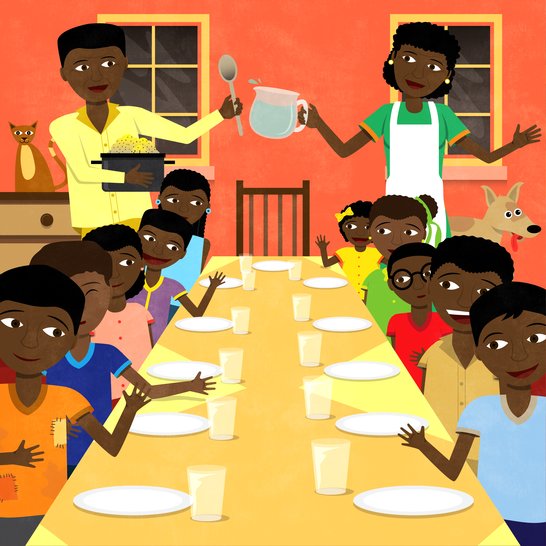
And so Magozwe moved into a room in a house with a green roof. He shared the room with two other boys.
Altogether there were ten children living at that house. Along with Auntie Cissy and her husband, three dogs, a cat, and an old goat.
Et Magozwe emménagea dans une chambre, dans une maison au toit vert. Il partageait la chambre avec deux autres garçons. Il y avait dix garçons au total qui vivaient dans la maison. Y vivaient aussi tante Cissy et son mari, trois chiens, un chat et un vieux bouc.
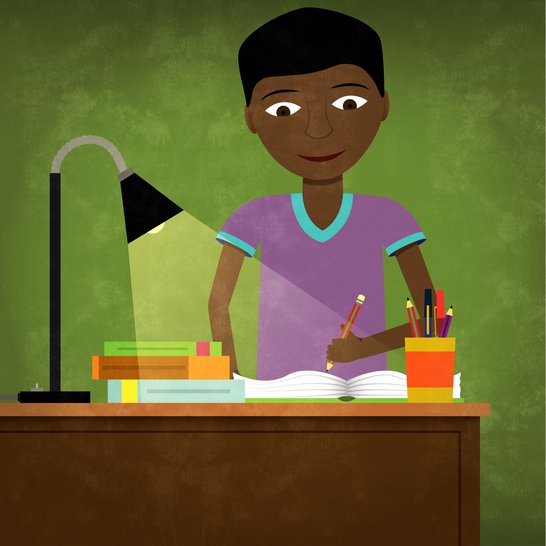
Magozwe started school and it was difficult. He had a lot to catch up. Sometimes he wanted to give up.
But he thought about the pilot and the soccer player in the storybooks. Like them, he did not give up.
Magozwe commença l’école. C’était difficile. Il avait beaucoup à rattraper. Quelquefois il voulait abandonner. Mais il pensait à la possibilité de devenir pilote ou joueur de football. Et comme les deux garçons de l’histoire, il n’abandonna pas.
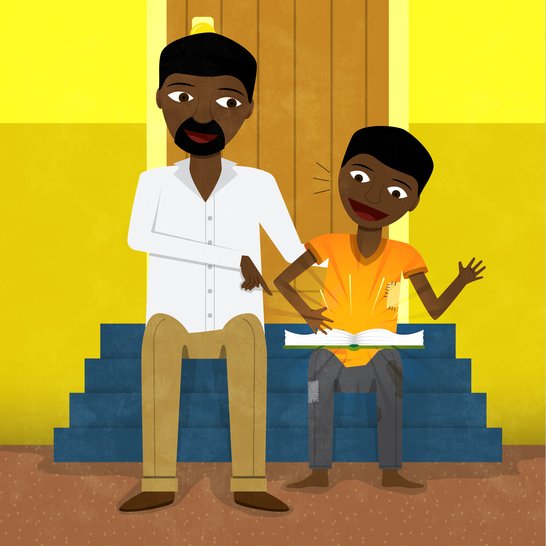
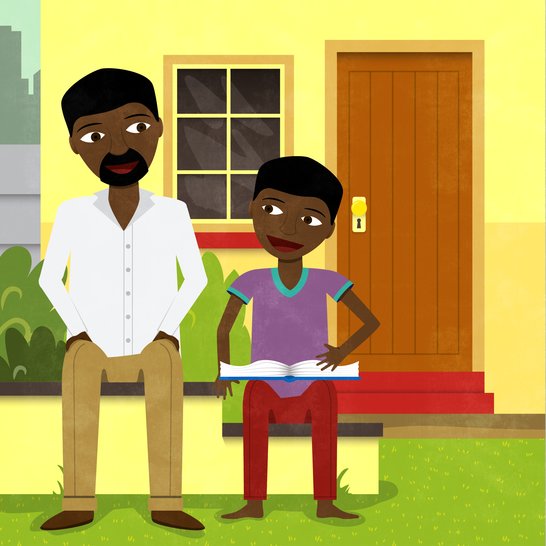
Magozwe was sitting in the yard at the house with the green roof, reading a storybook from school. Thomas came up and sat next to him.
“What is the story about?” asked Thomas.
“It’s about a boy who becomes a teacher,” replied Magozwe.
“What’s the boy’s name?” asked Thomas.
“His name is Magozwe,” said Magozwe with a smile.
Magozwe était assis à l’entrée de la maison au toit vert, et lisait un livre qui venait de l’école. Thomas vint et s’assis à côté de lui. Il lui demanda : « De quoi parle l’histoire ? » Magozwe répondit : « C’est l’histoire d’un petit garçon qui voulait devenir professeur. » «Comment s’appelle le garçon », lui demanda Thomas. « Son nom est Magozwe », lui répondit Magozwe, avec un sourire.